About Foundation
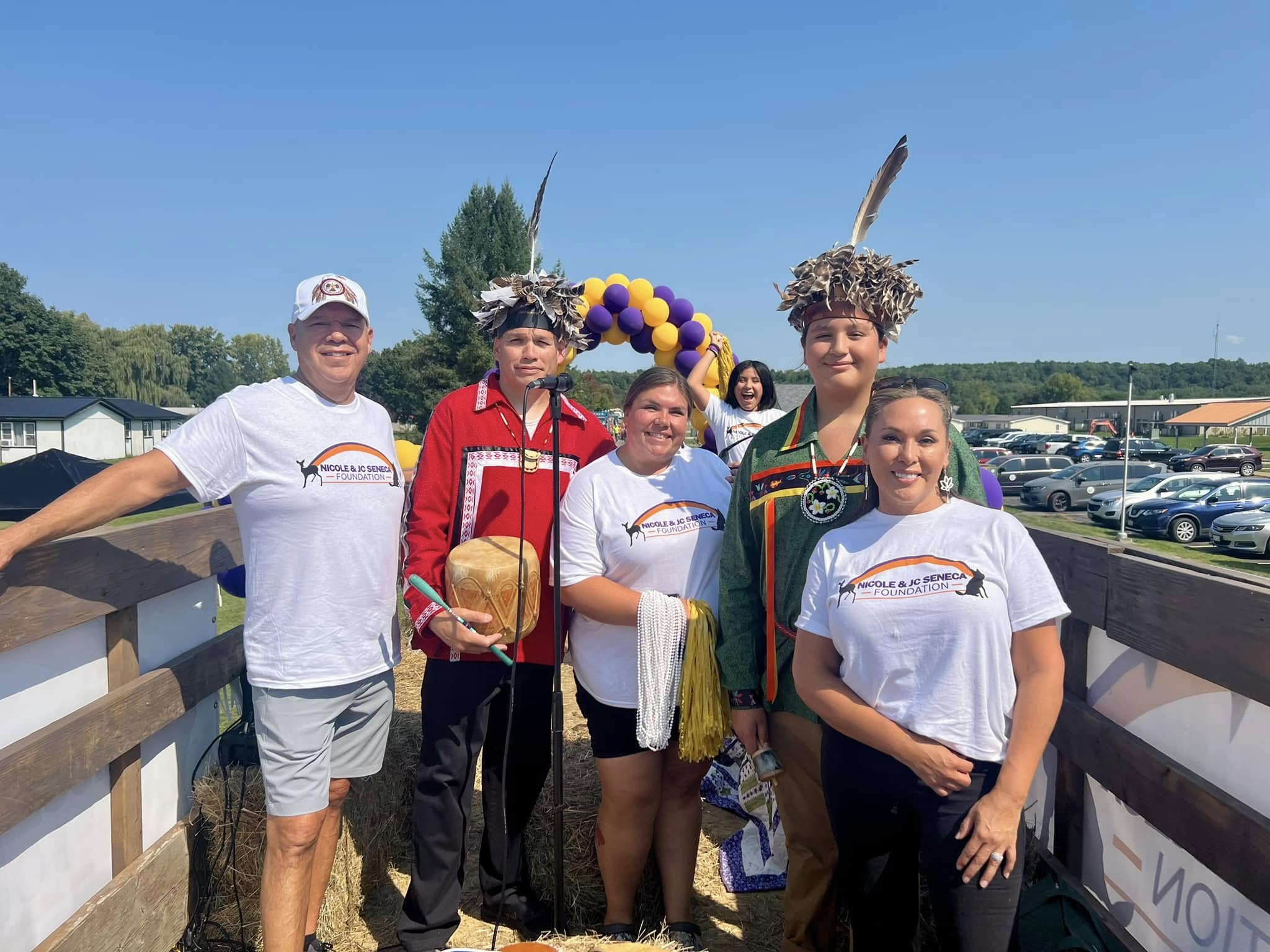
The Nicole & JC Seneca Foundation (JCSF) is a 501(c)(3) non-profit organization whose mission is to advance healthy living in body, mind, and spirit for the people of the Seneca Nation and surrounding communities. Operating on a relationship-based model, we aim to build established connections to maximize our community impact. We achieve our goals through a variety of supportive means, which include backing the endeavors of other charitable organizations, hosting community fundraising initiatives, and sponsoring custom programming designed to improve local lives.
Our Story & Leadership
Founded in 2012 by J. Conrad “JC” Seneca, the foundation reflects a deep personal and civic commitment to tribal and local well-being. JC Seneca is a lifelong resident of the Cattaraugus territory and a distinguished leader within the Seneca Nation. Throughout his life, he has served in numerous Native government roles, including serving as a Seneca Nation Tribal Councilor and Nation Treasurer. In addition to his public service, he is a prominent Native entrepreneur and the owner of Tallchief Territory Home of Native Pride.
JC’s passion for mental health advocacy, wellness, and giving back stems directly from his personal journey of recovery. His choice to share his experiences publicly was motivated by a dedication to help others fighting addiction and to address the ongoing mental health needs within the community.
The core leadership team and board of directors driving the foundation’s initiatives forward include J. Conrad Seneca, Nicole Seneca, Erika Seneca-Hastie, and Laurianne Griffis.
JC Seneca Foundation Partners with Center for Indigenous Cancer Research at Roswell Park Comprehensive Cancer Center
January 24 Buffalo/Irving, NY—In 2012, Seneca Nation Businessman J.C. Seneca formed the JC Seneca Foundation (JCSF) with a mission to form partnerships that promote the physical, emotional, intellectual and spiritual well-being of Native people and their surrounding communities. Since then, Seneca has realized that mission by supporting charitable programs such as It Takes a Tribe, providing sponsorships for initiatives including Bikers Against Child Abuse and The Ride for Dialysis, and forming partnerships with community health organizations such as CINQ Care (formerly G-Health Enterprises,) and Harmonia Collaborative Care. As JCSF moves into its second decade, Seneca is taking steps to further his foundation’s impact.
“Statistics prove that Native People are at greater risk than the majority of Americans when it comes to a number of diseases, mental health issues, and addictions,” Seneca stated. “They also are the last on the list when it comes to affordable health insurance that could provide needed care and treatments. That’s why I am pleased to join with Roswell Park Comprehensive Cancer Center in announcing a partnership between my JC Seneca Foundation and their Center for Indigenous Cancer Research (CICR). Our united goal is to offer navigation and screening services at my Native Pride Business on the Tallchief Territory in Irving, to help those on the Cattaraugus and Allegany Territories and surrounding communities learn about and seek treatments for the many forms of cancers afflicting our people.”
“Working together with the JC Seneca Foundation provides a unique opportunity to improve cancer care and access,” said Candace S. Johnson, PhD, President & CEO and M&T Bank Presidential Chair in Leadership at Roswell Park. “This is a proven approach that can help bolster health outcomes in this community.”
This past year, through a $3.3 million grant from the Bristol Myers Squibb Foundation, Roswell Park has installed six full-time patient navigators in high-need rural areas and Native Nations across New York State. The funding provides a tailored program of breast and prostate cancer screening education, the continuum of cancer care and management of co-occurring conditions. Community Patient Navigator Marissa Haring, MS, started her twice-monthly sessions open to the community at Native Pride in December.
“We’re that friendly face that you can come and talk to about these crucial topics,” said Haring. “We can get you screened and be there to answer your questions so you can take charge of your health.”
Proven medical research shows that Indigenous people suffer a disproportionate number of diagnoses and higher mortality rates when it comes to cancer. Statistically, American Indians/ Alaska Natives are more likely to develop cervical cancer, experience the highest rates of liver cancer and intrahepatic bile duct cancer and face higher death rates from kidney cancer. In addition, the higher levels of smoking and pre-existing rates of obesity, diabetes, and chronic liver and kidney disease among those in Native Communities can complicate cancer cases and treatments. According to Rodney Haring, PhD, MSW, Director of The Roswell Park Center for Indigenous Cancer Research, forming partnerships with organizations like the JC Seneca Foundation helps meet both the mission and vision of their program.
“The Center is the first of its kind in the Northeast, and aims to honor the values of Indigenous knowledge, sovereignty, and respect for the environment through community-driven partnerships, such as with the JC Seneca Foundation,” Dr. Haring stated. “Through our collaborative efforts on the Cattaraugus and Allegany Territories, we will coordinate educational events, host health screenings, and develop action plans to address not only cancer health disparities, but larger issues that impact wellness, such as human’s relationship with the environment. We will learn and apply lessons from both academic medicine and Indigenous knowledge which will not only lead us to cutting-edge cancer services for, and with, Indigenous populations, but to translatable science, medicine and cancer care for Indigenous territories, Nations and populations worldwide.”